
Terpenes: The Flavor, Aroma & Vibe Side of Cannabis
Terpenes are naturally occurring aromatic compounds found in cannabis and many other plants. They help shape how a strain smells, how it tastes, and why two strains with similar THC numbers can still feel like totally different experiences.
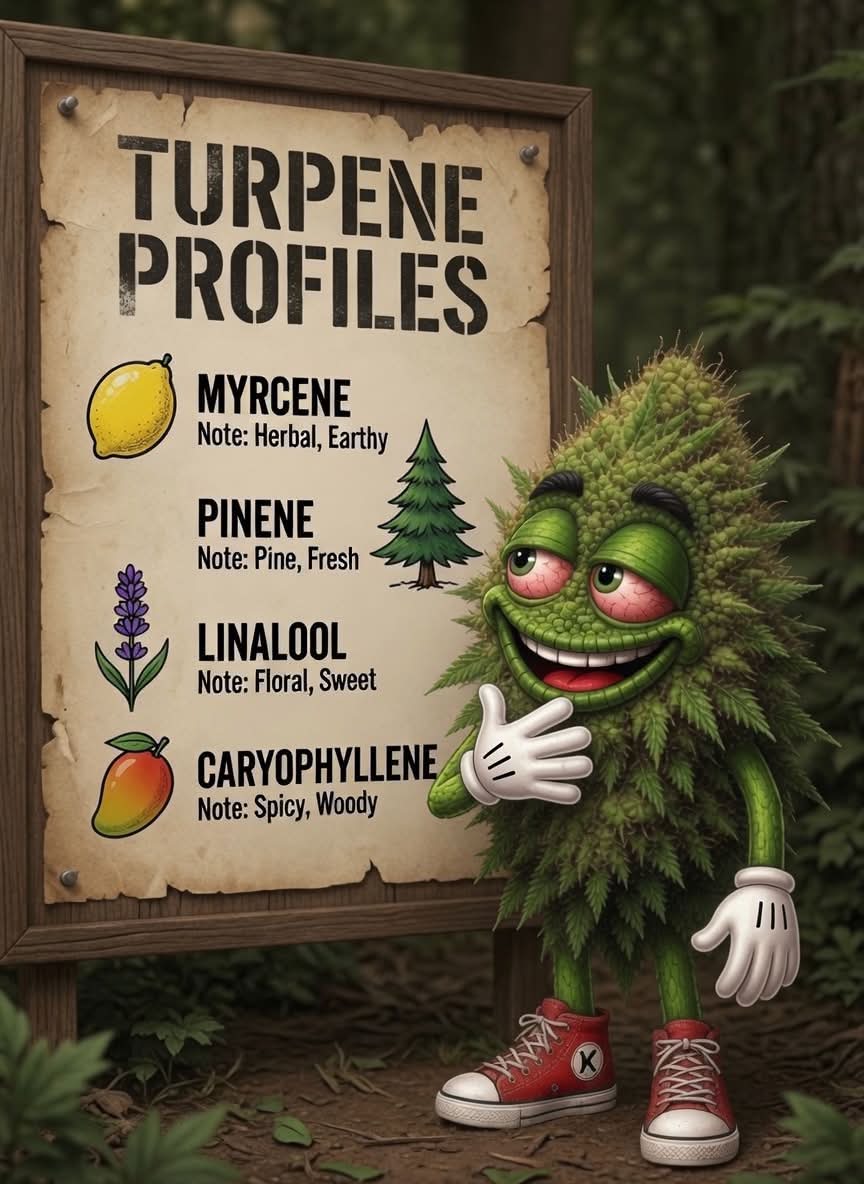 Buddie says: follow your nose. It usually knows what sounds good.

Think of terpenes like the personality layer of the plant.
THC and CBD get a lot of the attention, but terpenes help explain the smell of citrus, pine, lavender, pepper, diesel, fruit, earth, and spice. They are not magic, and they are not a guarantee, but they are useful clues when choosing what kind of cannabis experience you may enjoy.
What are terpenes?
The easiest way to understand terpenes is to stop thinking only about potency and start paying attention to aroma, flavor, and product type.
They create aroma.
That lemony, piney, floral, funky, peppery, or earthy smell coming from a strain? Terpenes are a huge part of that sensory fingerprint.
They help shape flavor.
Terpenes can influence whether a strain tastes bright and citrusy, sweet and herbal, sharp and spicy, or deep and earthy.
They may influence experience.
Terpenes may play a role in the overall feel of a strain, especially when combined with cannabinoids, but effects vary by person, dose, product, and tolerance.
Common aroma families
Before memorizing terpene names, learn the smell families. This makes dispensary menus and strain descriptions way easier to understand.
Citrus
Lemon, orange, bright, zesty, fresh.
Pine
Forest, herbal, sharp, clean, green.
Floral
Lavender, flowers, soft, sweet, calming.
Earthy
Musky, herbal, hoppy, woodsy, grounded.
Spicy
Pepper, clove, fuel, warmth, bite.
Common cannabis terpenes
These are some of the terpene names you will see most often on strain cards, product labels, and dispensary menus.
Myrcene
EarthyMyrcene is often associated with earthy, musky, herbal, and sometimes slightly fruity aromas.
- Aroma Earthy, musky, herbal, hoppy.
- Also In Mango, hops, thyme, lemongrass.
- Buddie Tip If a strain smells deep, herbal, and heavy, myrcene may be part of the reason.
Limonene
CitrusLimonene is known for bright citrus notes that can smell like lemon peel, orange, or fresh fruit.
- Aroma Lemon, orange, sweet citrus, fresh zest.
- Also In Citrus peels, rosemary, peppermint.
- Buddie Tip If you like strains that smell bright and lively, look for citrus-heavy profiles.
Pinene
PinePinene brings the crisp forest smell. It is commonly described as piney, woody, herbal, and sharp.
- Aroma Pine needles, herbs, wood, fresh forest air.
- Also In Pine trees, basil, rosemary, parsley.
- Buddie Tip If it smells like walking through the woods, pinene may be showing up.
Linalool
FloralLinalool is commonly tied to floral, lavender-like aromas with soft herbal sweetness.
- Aroma Lavender, flowers, sweet herbs, soft spice.
- Also In Lavender, mint, coriander, birch.
- Buddie Tip If you like softer floral strains, linalool is a name worth remembering.
Caryophyllene
PepperCaryophyllene often gives cannabis a peppery, spicy, clove-like bite.
- Aroma Black pepper, spice, cloves, warm wood.
- Also In Black pepper, cloves, cinnamon, oregano.
- Buddie Tip If the strain has a spicy nose, caryophyllene may be part of the profile.
Humulene
HoppyHumulene is often described as woody, earthy, herbal, and hoppy.
- Aroma Hops, herbs, wood, earth, subtle spice.
- Also In Hops, sage, ginseng, basil.
- Buddie Tip If you catch a beer-like hoppy smell, humulene may be in the mix.
Choosing with terpenes
Terpenes are not a perfect prediction system, but they are one more useful clue when you are comparing strains or products.
Do not shop by THC alone.
Two products can have similar THC numbers and still smell, taste, and feel very different. That is because the whole profile matters: cannabinoids, terpenes, dose, product type, freshness, and your own body.
A better move is to pay attention to what you actually enjoy. Keep track of the strains, aromas, and terpene profiles that work well for you, then use that pattern the next time you shop.
Buddie’s simple method
- Smell first when you can. Your nose is useful.
- Look for the top terpenes on the label or strain card.
- Start low with unfamiliar products.
- Write down what you liked and what you did not.
- Use patterns, not hype, to guide the next pick.
Buddie’s real talk: terpenes are clues, not promises.
Everyone responds differently to cannabis. Terpenes can help you understand aroma and product personality, but they do not guarantee a specific effect. Start low, go slow, follow local laws, and avoid driving or operating equipment while impaired.